Today was one of those workshop days where problem-solving became just as important as sanding and refinishing.
After continuing to strip away old paint and finish from the children’s dining set, I moved into repairing one of the damaged support brackets on the chair frame. Once the old layers were removed, it became clear that some of the joints needed more than cosmetic work. The structure had loosened over time, so reinforcing the frame properly was the next step.
To make the repair work, I had to get creative with setup and alignment. The pocket hole jig did not naturally fit the way I needed for the repair, so I improvised using 90-degree clamps, corner brackets, and multiple test fits to keep everything square and level. Sometimes restoration work turns into engineering on the fly, and today definitely felt like one of those days.
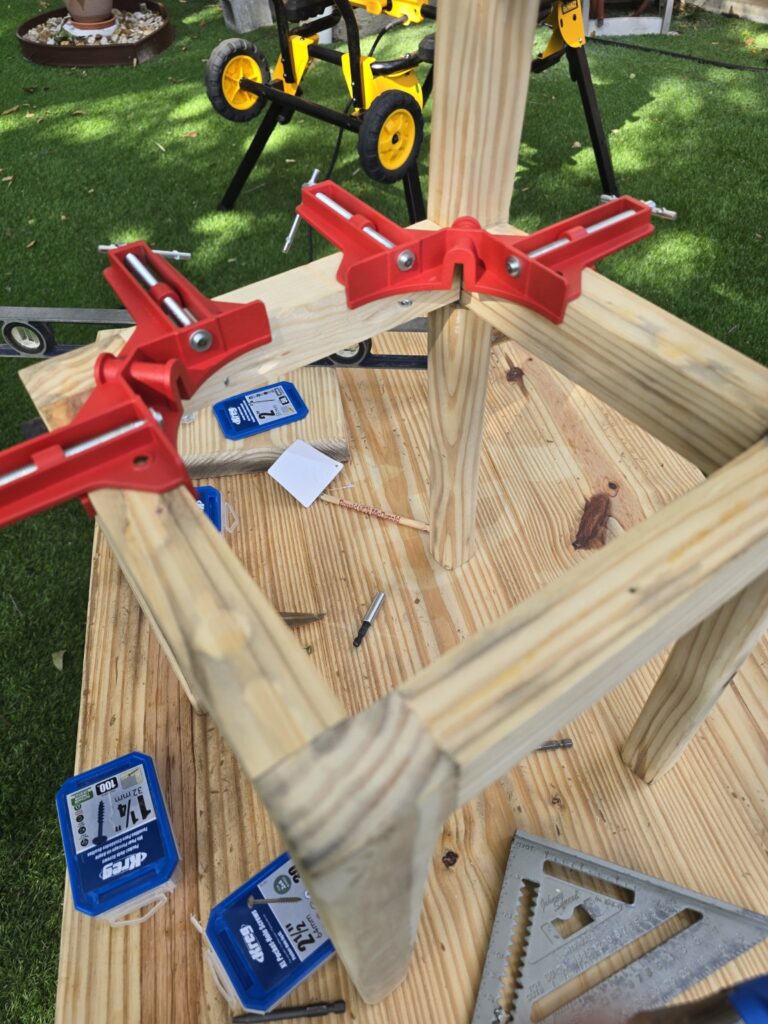
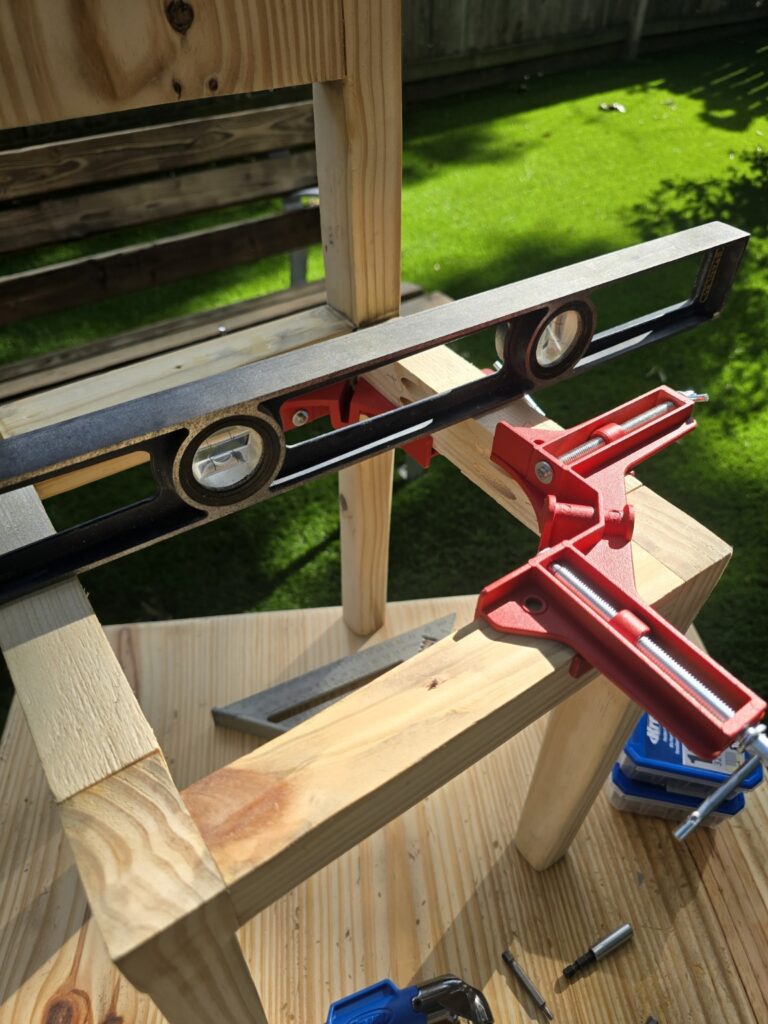
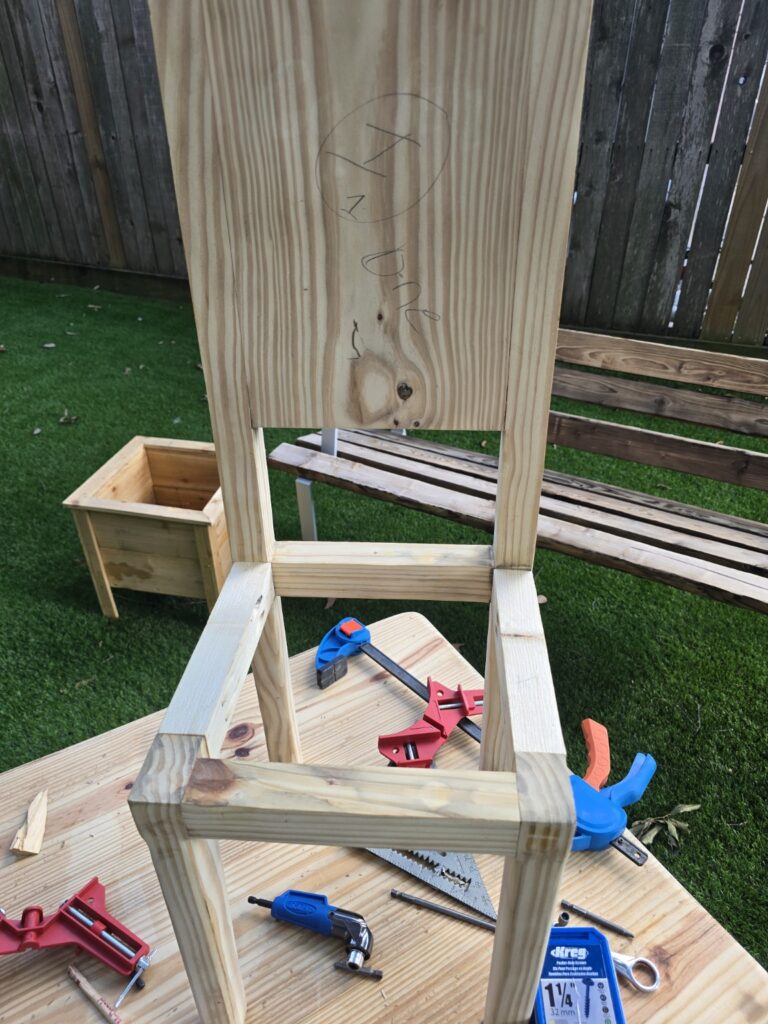
There was a lot of measuring, adjusting, reclamping, and checking alignment before finally driving the screws home. Getting the joints tight and flush again took patience, but seeing the chair frame pull back together solidly made the effort worth it.
One thing I’m learning through this restoration is that older furniture always tells a story once you take it apart. Underneath the paint and wear, you can see previous repairs, stress points, and the craftsmanship that originally held everything together. Bringing it back to life means respecting both the flaws and the character of the piece.
The project is still far from finished. There is more paint stripping ahead, additional sanding, and final prep work before stain or finish can even be considered. But structurally, this set is finally starting to feel solid again.
Definitely an exciting and productive day in the workshop.